


The Cooling System Is Quiet Until It Needs Your Attention | Why It Deserves Regular Care
There Is a Reason Your Engine Does Not Melt
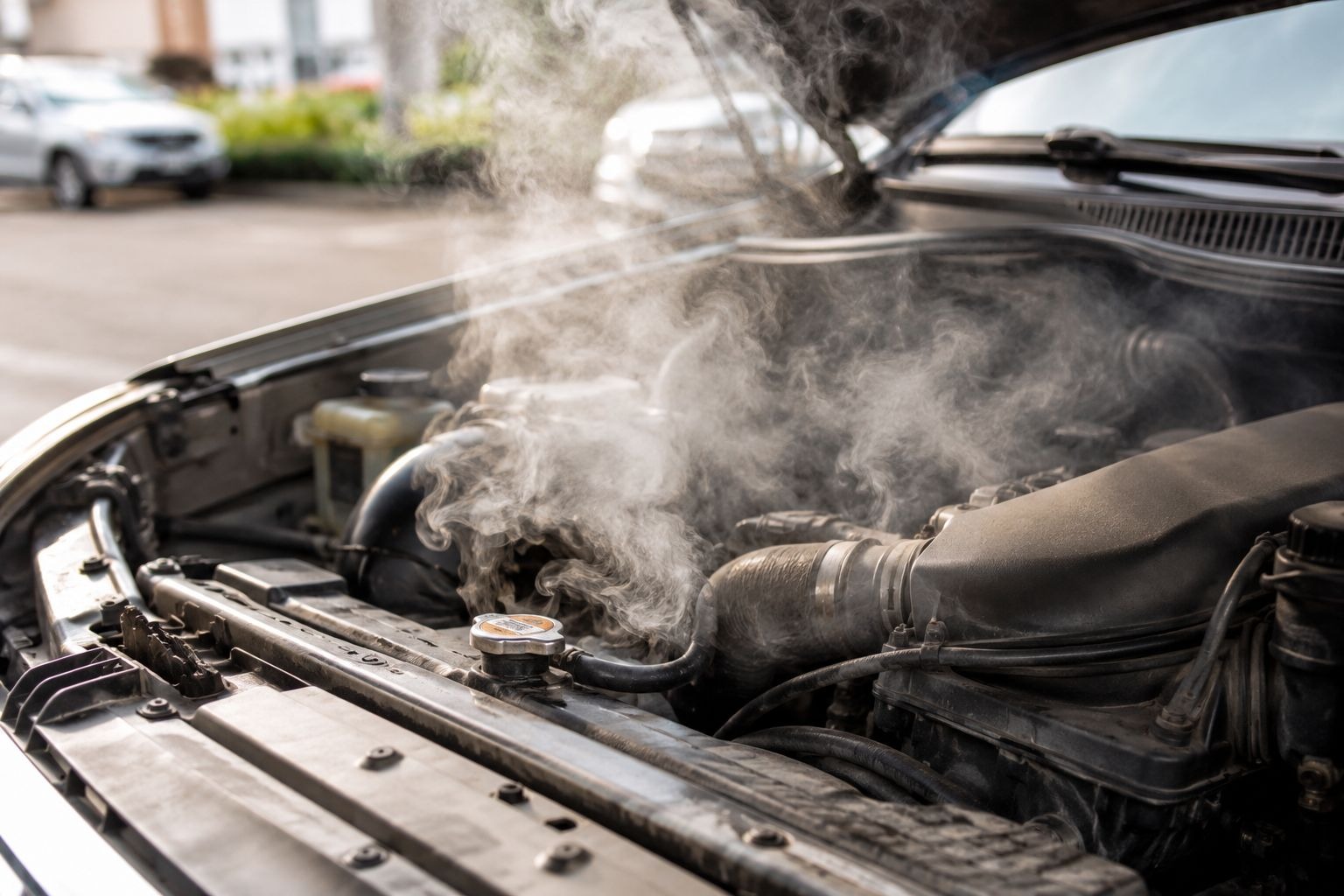
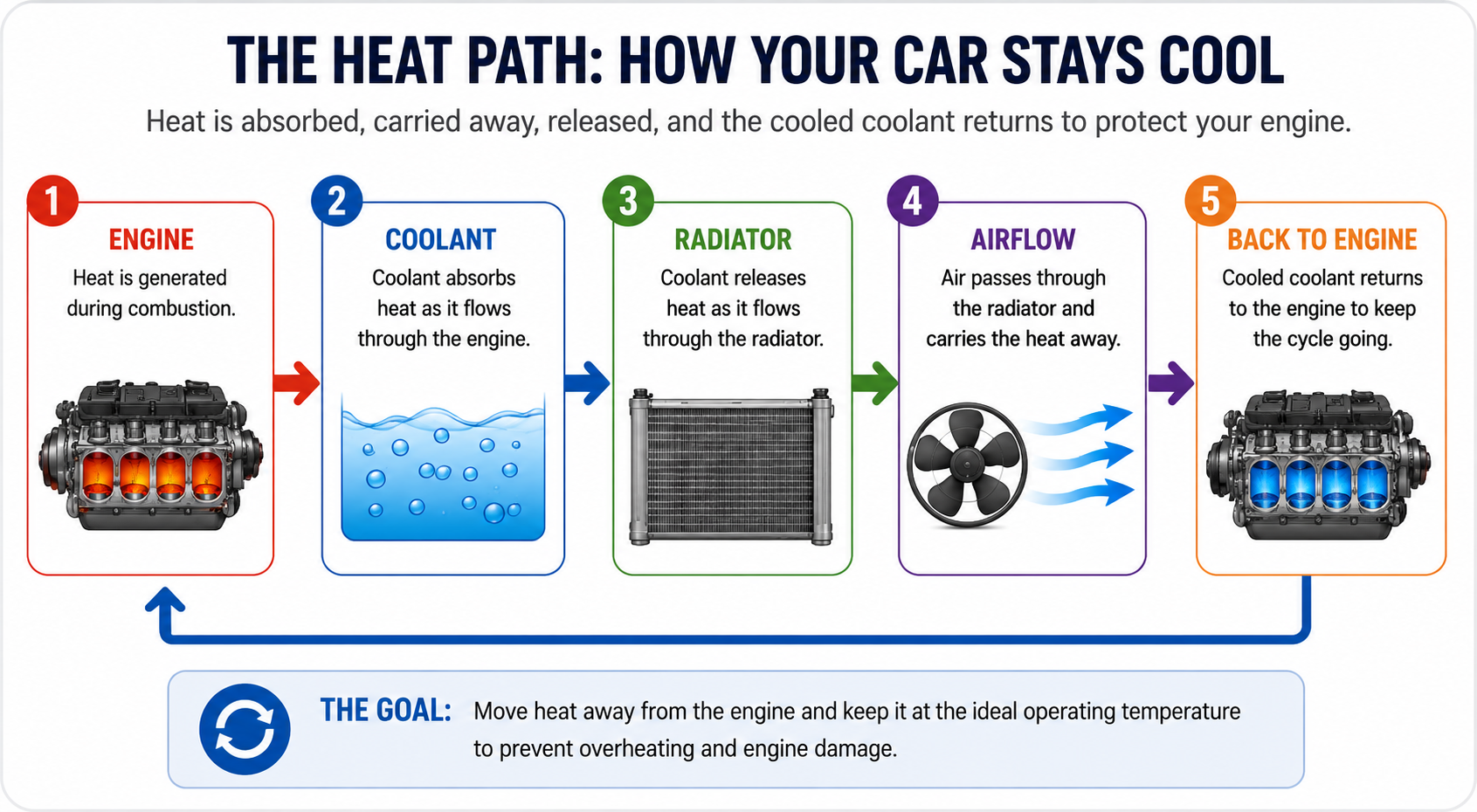
Every time you drive, thousands of small explosions happen inside your engine. That is how power is created. It is also how an enormous amount of heat is produced. If that heat stayed in one place, the engine would not last very long. Fortunately, another system is constantly working behind the scenes to carry that heat away before it becomes a problem. Most drivers never think about it because, when everything is working properly, there is
nothing to notice. The cooling system simply does its job.
Your Dashboard Usually Gives You Clues
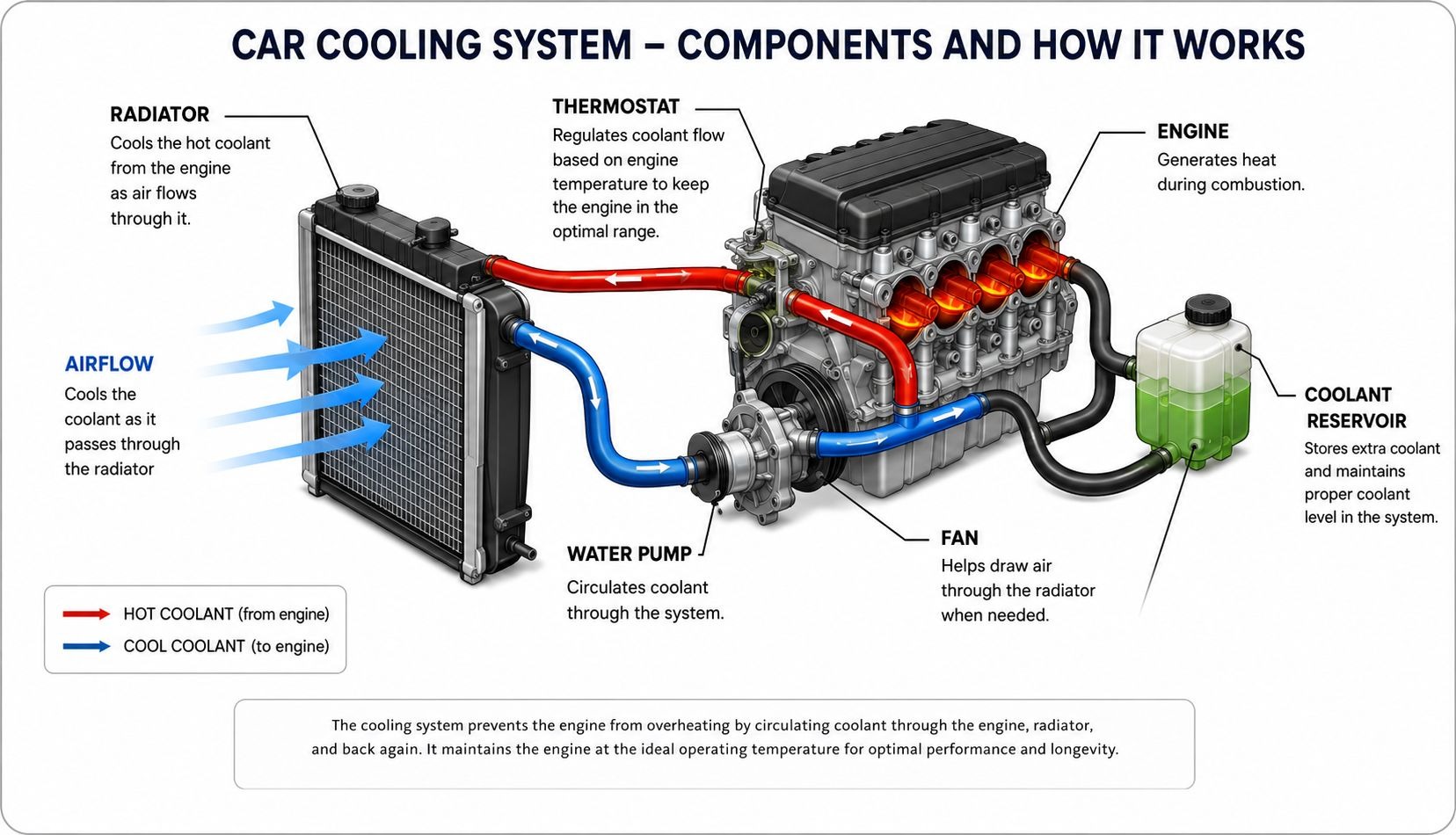
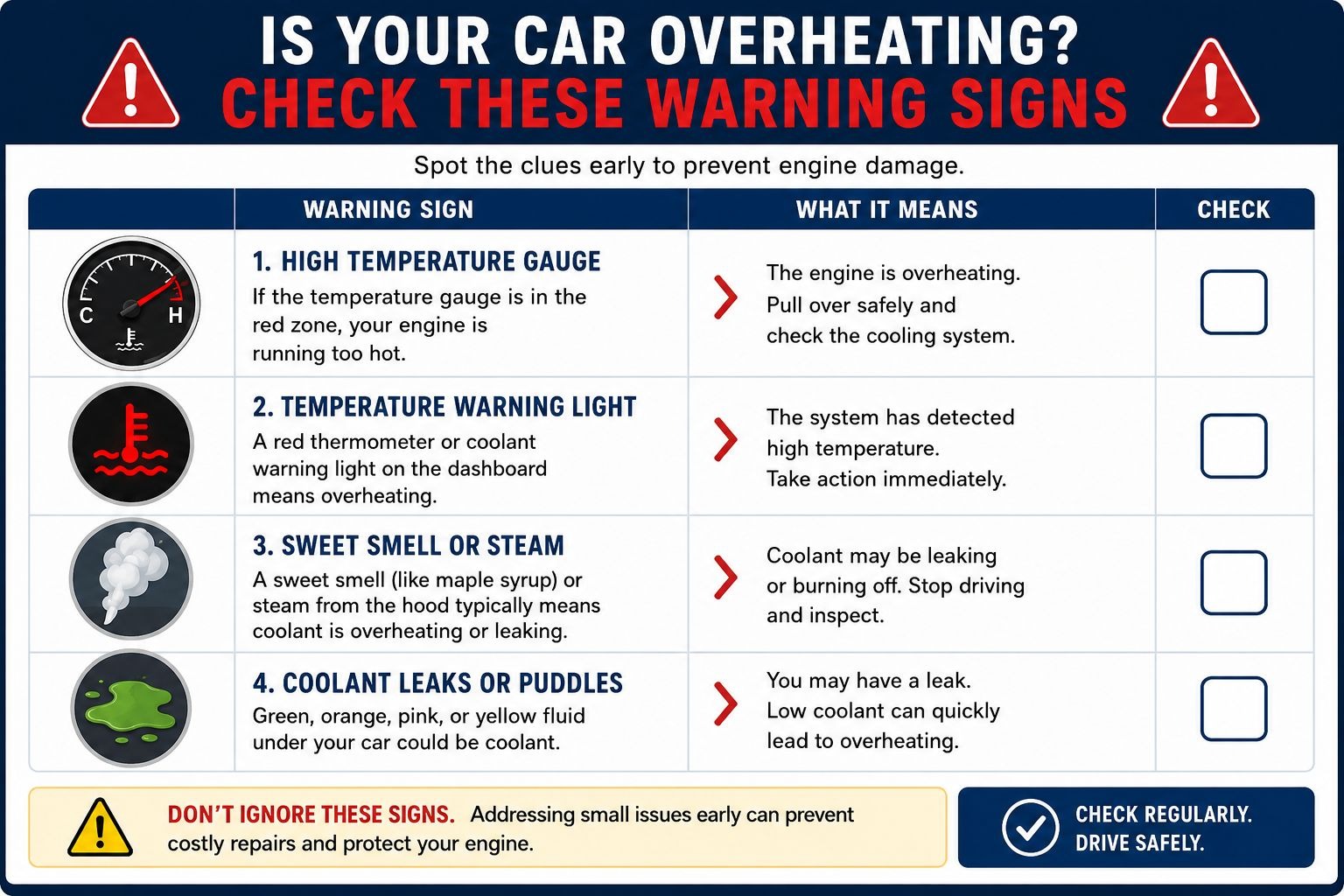
Vehicles often try to tell us when something is changing — and knowing where these parts sit under the hood makes it easier to understand what each warning sign means.
Common warning signs of a cooling system problem:
• Rising temperature gauge — the needle climbing higher than usual is often the first and clearest sign the engine is running hotter than it should.
• Warning light — a temperature or coolant warning light appearing unexpectedly means the system has already detected a problem.
• Sweet smell after parking — a sweet, syrup-like smell usually points to leaking or overheating coolant.
• Puddle beneath the vehicle — coolant is often green, orange, pink, or yellow, and a small puddle can be the earliest visible sign of a leak.
None of these signs should be ignored. They're often the earliest opportunity to solve a problem before it turns into expensive damage.
Seasons Affect Your Cooling System Too
People often associate overheating in the middle of summer. Hot weather certainly puts extra demand on the engine. Winter brings its own challenges. Cold temperatures affect coolant, rubber hoses, and other cooling system components. That is why inspections should not be limited to one season. The system works throughout the year, regardless of what the weather looks like outside.
Summer vs winter cooling system stress points
Stress Point | Summer Risk | Winter Risk |
|---|---|---|
Coolant Concentration | Weak mix (too much water) reduces boil-over protection. | Weak mix allows coolant to freeze, which can crack the engine block. |
Radiator/Fan Airflow | Reduced airflow at low speed or idle in heavy traffic causes overheating. | Frozen debris or blocked airflow is rarely an issue; the bigger risk is a stuck-closed thermostat delaying warm-up. |
Rubber Hoses & Belts | Heat accelerates rubber degradation and softening. | Cold makes rubber brittle and more prone to cracking. |
Water Pump | Higher RPM demand under A/C load increases wear. | Cold-start coolant viscosity increases load on the pump seal. |
Thermostat | Can stick open, keeping the engine running cooler than optimal, causing minor efficiency loss. | Can stick closed, causing rapid overheating or poor cabin heat. |
Radiator Cap / Pressure | Weak seals become apparent quickly as pressure and temperature spike. | Cap failure is less obvious, but coolant can still be pushed out during warm-up cycles. |
Plain water alone freezes at 32°F and boils at 212°F — offering no real protection in either extreme. A standard 50/50 antifreeze-to-water mix extends that range to roughly -34°F on the low end and 226°F on the high end. A stronger 70/30 mix pushes protection even further, down to about -84°F and up to 235°F. That is why coolant concentration matters just as much for winter driving as it does for summer heat. That is why inspections should not be limited to one season. The system works
throughout the year, regardless of what the weather looks like outside.
Prevention Is Always Better Than Recovery
Line prevention is better than cure works the best here also. When you have your car under regular checks, you know what the status of your cooling system is. Regular inspections can help you to keep the car system under check and make it work in a manner that they can keep working without any problem. If you get the inexpensive parts replaced during regular inspections, it can help you to prevent the hefty bills that come later on when the whole system crashes.
A routine coolant flush typically runs $100–$270, averaging around $150. Left unaddressed, cooling system failures can escalate to an engine rebuild averaging $2,500–$4,500, or a full engine replacement averaging $3,000–$7,000 or more. On average, that's roughly 20–25 times the cost of the flush that could have prevented it. When you give your car the best hands, you are bound to get the best results.
Why Should You Trust Us?
Whenever you bring your car to us, whether it is for regular checkup or after your cooling system has run into a problem. We make sure that the best mechanics take care of it. We go into the meticulous details and look at everything that the car may need. When you give your car the best hands, you are bound to get the best results. Our mechanics are highly trained and also ensure that your car gives you optimum performance at all times.
The Best Cooling System Is The One That You Do Not Even Know About
When you know the destination, and the people that are travelling with you are your loved ones, you automatically drive the car with a lot of confidence. This confidence improves the efficiency of the car and also keeps the cooling system functioning in the best possible manner. Thus, the right people and the right speed guarantee the longevity of the cooling
system.
Frequently Asked Questions
How do I know if my car's cooling system needs attention?
Watch for a rising temperature gauge, a coolant warning light, a sweet smell after parking, or a puddle beneath the vehicle. Any one of these is often the earliest sign of a developing problem, and catching it early is far less expensive than waiting for the system to fail. Adam's Columbus Transmission offers cooling system inspections for drivers throughout Columbus, OH.
What coolant mix should I use in my car?
A standard 50/50 antifreeze-to-water mix protects most vehicles down to about -34°F and up to 226°F, while a stronger 70/30 mix extends that range to roughly -84°F and 235°F. Plain water alone only protects between 32°F and 212°F, which is why the correct mix matters year-round, not just in winter or summer.
Does the cooling system need to be checked in every season?
Yes. Summer heat puts extra strain on airflow and coolant concentration, while winter cold makes hoses brittle and can allow a weak coolant mix to freeze. A cooling system should be inspected regularly throughout the year, not just before a road trip or a heat wave.
How much does a coolant flush cost compared to an engine repair?
A routine coolant flush typically costs $100–$270. Left unaddressed, cooling system failures can lead to an engine rebuild averaging $2,500–$4,500, or a full engine replacement averaging $3,000–$7,000 or more —making a flush roughly 20–25 times cheaper than the repair it can prevent.
Where can I get my cooling system inspected in Columbus, OH?
Adam's Columbus Transmission provides cooling system inspection and service for drivers throughout Columbus, OH, in addition to transmission diagnostics, repair, rebuilds, and fluid services. You can schedule an appointment through their website or by calling (614) 863-6100.